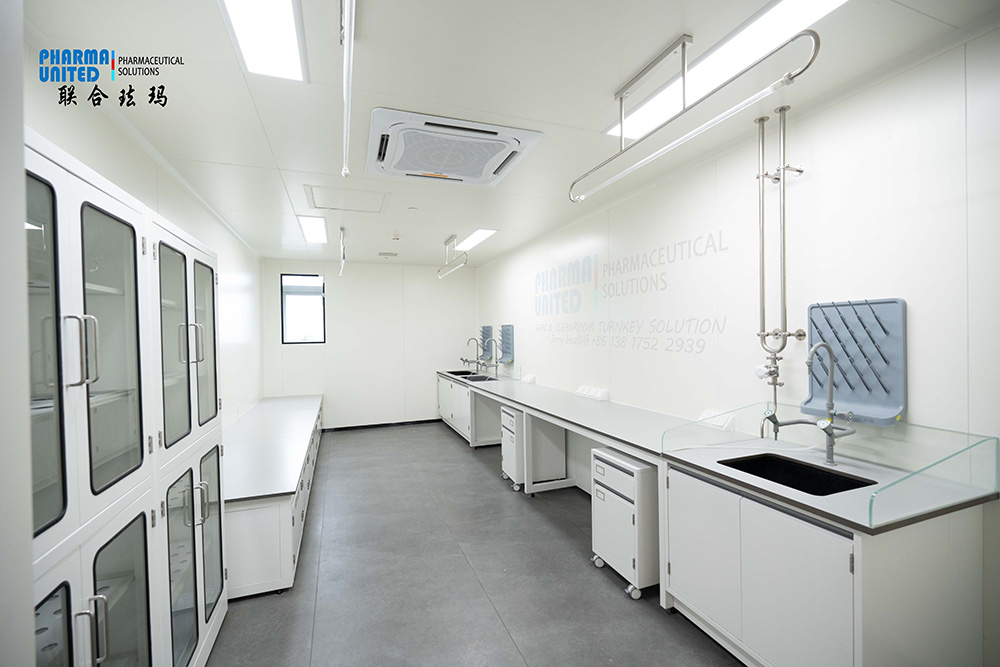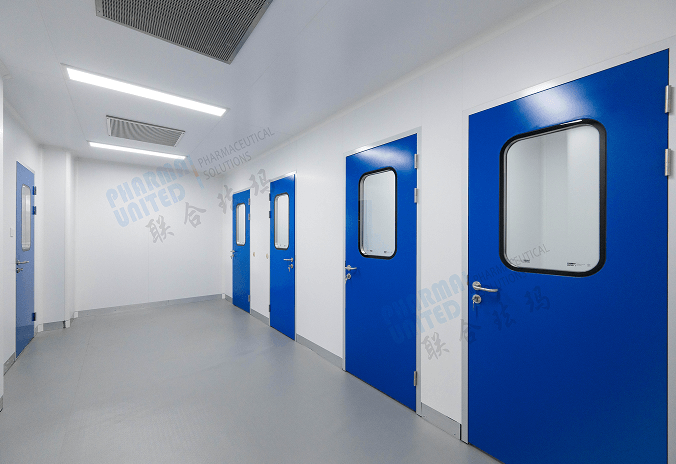
Pharmaceutical Cleanrooms
In the pharmaceutical manufacturing process, the cleanliness of the environment is just as critical as the quality of the raw materials. Pharma United designs and manufactures cleanrooms and contamination control equipment to comply with rigorous industry regulations, minimizing the presence of contaminants by maintaining a highly controlled environment.
In the United States, pharmaceutical cleanrooms are regulated by the FDA; in Europe, they are regulated by the EMA. Pharmaceutical cleanrooms must comply with Current Good Manufacturing Practices (CGMP). According to the FDA, GMP refers to the Current Good Manufacturing Practices enforced by the agency. Compliance with CGMP regulations requires pharmaceutical manufacturers to adequately control their manufacturing operations, thereby ensuring the identity, potency, quality, and purity of their drug products. In short, GMP helps ensure product quality and safety consistency by focusing on five key elements—commonly referred to as the "5 Ps" of GMP: People, Premises, Processes, Products, and Procedures.
Pharma United's modular cleanroom systems and pharmaceutical Turnkey Cleanroom solutions have been widely adopted by pharmaceutical companies to achieve compliance with CGMP and FDA standards. Pharmaceutical filling rooms are typically classified as Class 100 / ISO 5 environments. The cleanliness classification of other rooms may vary depending on their specific intended use.
To be categorized as a true pharma cleanroom, the environment must meet several requirements. The U.S. Food and Drug Administration (FDA) establishes and manages the standards for cleanrooms in pharmaceutical manufacturing, setting requirements to keep medications and other pharmaceutical products safe for consumption and use. Some of the cleanroom guidelines in pharma include the following:
All of these cleanroom requirements for pharmaceutical sector businesses work together to safeguard workers and equipment, protect pharmaceutical products from contamination, and keep end users safe from potential health concerns
Pharmaceutical cleanroom equipment plays a critical role in maintaining contamination control, ensuring compliance with GMP standards, and supporting stable production environments. Below are the essential cleanroom equipment types commonly used in pharmaceutical and biotech facilities:
Air showers are decontamination chambers installed at cleanroom entrances. They use high-velocity HEPA-filtered air to remove dust and particles from personnel and materials before entering the cleanroom.
Key features include:
Air showers are widely used in pharmaceutical manufacturing areas to reduce particulate contamination and maintain ISO cleanroom standards.
Laminar Air Flow systems provide a controlled, unidirectional airflow that continuously removes airborne particles from the working area, creating a highly sterile environment.
Key features include:
Laminar Air Flow systems are commonly used in pharmaceutical filling, laboratory testing, and sterile preparation zones.
Cleanroom pass-thru chambers are used to transfer materials between cleanroom and non-cleanroom areas without compromising air cleanliness or pressure balance.
Key features include:
Cleanroom pass-thrus help minimize personnel movement in and out of cleanrooms, reducing contamination risk and improving workflow efficiency.
A: A pharmaceutical cleanroom is cleanroom used for manufacturing of pharmaceuticals products such as medicines. They are required by the FDA to ensure the safety and effectiveness of the medicines. Pharmaceutical cleanrooms typical must be sterile and have extremely demanding cleanliness requirements.
A: Common pharmaceutical cleanroom equipment includes air showers, laminar air flow systems, cleanroom pass-thrus, HEPA filtration units, HVAC systems, and environmental monitoring systems (EMS/BMS) to maintain contamination control and stable operating conditions.
A: ISO standards focus on airborne particle concentration and cleanroom classification, while GMP (Good Manufacturing Practice) covers broader regulatory requirements including hygiene control, documentation, validation, and production processes. Pharmaceutical cleanrooms often need to comply with both.
A: Pharmaceutical cleanrooms typically are ISO-5/class 100 for aseptic filling and sterile processes. Less critical area are often ISO-6/class 1000 or ISO-7/class 10,000. The EU GMP Annex puts similar but slightly more stringent requirements.
A: The FDA mandated CGMP Current Good Manufacturing Practices for pharmaceutical manufacturers which is a higher standard than GMP Good Manufacturing Practices. This is a higher standard for pharmaceutical cleanrooms.
A: Pharmaceutical cleanroom flooring must be chemical resistant, otherwise the aggressive cleaning agents used in pharmaceutical cleanrooms will damage the flooring. The cleanroom flooring minimize joints and cracks. Contamination can get stuck in these features which can cause bacterial growth. The most common pharmaceutical cleanroom floorings are heat-welded vinyl with integral cove or epoxy coating with urethane over coat.
A: Pharmaceutical cleanrooms are subject to harsh chemical cleaning of both flooring and walls. Fiber Reinforced Plastic (FRP) walls have good chemical resistance are a common choice.
A: Pharmaceutical cleanrooms require both viable and non-viable particle testing. The viable testing is done with settling plates. The non-viable testing is done with laser particle counters.
A: USP 797/800 cleanrooms are pharmaceutical controlled environments used for sterile and hazardous drug compounding in pharmacies. These guidelines are issued by the United States Pharmacopeia (USP), while enforcement is typically handled by state pharmacy boards. In general, USP 797/800 cleanroom facilities include ISO 8 gowning areas, ISO 7 compounding rooms, and ISO 5 critical zones such as laminar flow hoods or glove boxes.
A: A buffer room is a classified intermediate area within a cleanroom facility designed to reduce contamination risk and prevent cross-contamination between spaces. It is typically used for less critical activities such as material staging, preparation, or transfer, while the main cleanroom is reserved for high-precision or sterile operations requiring stricter environmental control.
TOP 10 EPC Cleanroom Supplier in China
Turnkey vs. Non-Turnkey Cleanrooms
The Role of Cleanroom Equipment in Contamination Control
Leave Your Message

Pharma United Co., Ltd.
Pharma United Co., Ltd.
Tel.: +86 177 1554 8238
Add.: NO.58 Beiyuan Road, Dianshanhu, Kunshan, Jiangsu, China, ZIP code 215345
Navigation
Navigation