May. 27, 2026
Cleanrooms are carefully controlled spaces created to reduce airborne contamination, including dust particles, microorganisms, and chemical fumes. These environments are vital for industries where minor contamination can affect product performance, manufacturing accuracy, or research outcomes. Widely used in pharmaceutical manufacturing, biotechnology, medical devices, and electronics production, cleanrooms help maintain the clean, stable, and controlled conditions required for sensitive processes.
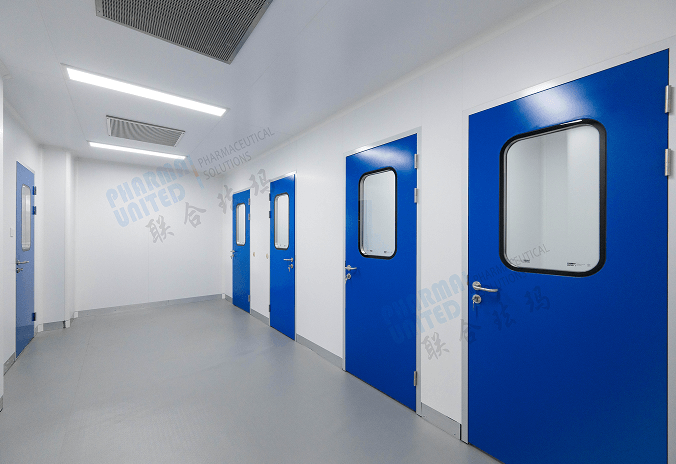
Building a cleanroom is a complex undertaking that requires meticulous planning and execution. Two primary approaches exist: turnkey and non-turnkey.
The choice between turnkey and non-turnkey depends on various factors, including project complexity, budget, timeline, and the availability of internal resources. Each approach has its advantages and disadvantages. By understanding the nuances of each option, you can make an informed decision that best aligns with your specific needs and goals.
A turnkey cleanroom is a fully integrated solution in which a single contractor is responsible for managing the entire project from start to finish. This includes early-stage consultation, system design, engineering, procurement, construction, installation, validation, and final commissioning.
In a turnkey model, a provider such as Pharma United Co., Ltd. oversees every phase of the cleanroom lifecycle, ensuring that all components—HVAC systems, filtration units, airflow control, cleanroom panels, and monitoring systems—work together seamlessly as a unified system.
This approach delivers a streamlined project experience for the client. Instead of coordinating multiple suppliers, contractors, and engineers, the client works with one dedicated team that handles all technical and operational aspects of the build.
As a result, the turnkey approach significantly reduces project complexity, minimizes communication gaps, and helps ensure consistent quality control throughout the entire process. It also accelerates project timelines, since design and construction phases are tightly coordinated under one management structure.
For companies operating in highly regulated industries such as pharmaceuticals, biotechnology, and semiconductor manufacturing, turnkey cleanroom solutions offer a practical way to achieve compliance-ready environments without diverting internal resources away from core business activities.
The turnkey cleanroom approach provides a range of strategic advantages that can greatly improve project efficiency, quality, and overall outcomes.
One of the most significant benefits is simplified project coordination. With a single contractor acting as the central point of responsibility, all communication flows through one channel. This eliminates the complexity of managing multiple suppliers, engineers, and subcontractors, allowing your internal team to focus on core business operations rather than day-to-day construction coordination.
Turnkey cleanroom providers typically operate with established workflows, standardized design practices, and strong supplier networks. These advantages help optimize resource allocation, reduce procurement delays, and improve scheduling accuracy. As a result, projects are often completed faster and with better cost control compared to fragmented multi-vendor approaches.
Turnkey providers bring deep, specialized expertise across all stages of cleanroom development, including design, HVAC integration, filtration systems, and validation processes. This end-to-end knowledge ensures the facility is built to meet strict industry standards such as ISO classifications and GMP requirements. At the same time, a single provider is fully accountable for the entire outcome, reducing ambiguity in responsibility.
By consolidating all project phases under one contract, the turnkey model significantly reduces the risks associated with miscommunication, design inconsistencies, and coordination errors between different contractors. This integrated approach helps ensure smoother execution, fewer delays, and greater predictability in both performance and delivery timelines.
Pharma United Co., Ltd. has established a strong reputation for delivering reliable turnkey cleanroom solutions across a wide range of industries. Our multidisciplinary team of engineers, project managers, and technical specialists works closely together to design, construct, and validate cleanroom systems tailored to each client’s specific operational needs while maintaining compliance with relevant industry standards.
Through our end-to-end project execution capabilities, we have supported many clients in achieving their cleanroom objectives, whether for pharmaceutical production facilities, scientific research laboratories, or high-precision electronics manufacturing environments.
In contrast to the turnkey approach, a non-turnkey cleanroom project follows a more segmented and client-driven model. Instead of relying on a single contractor to manage the entire process, the project is divided among multiple specialized vendors. Each party is responsible for a specific scope of work, such as architectural design, HVAC system installation, electrical engineering, cleanroom panel fabrication, and validation services.
This structure gives the client greater direct involvement in project coordination and decision-making, but it also requires more effort to manage the overall execution.
Although more complex to manage, the non-turnkey model offers several notable benefits:
One of the main advantages is the ability to handpick suppliers and systems based on specific technical requirements, performance preferences, and budget considerations. This allows for a highly customized cleanroom design that can be fine-tuned to meet precise operational needs.
By sourcing and negotiating each component or service individually, clients may have more direct control over spending. In some cases, this can lead to cost savings compared to bundled turnkey packages, especially when working with established vendor relationships.
Despite its flexibility, the non-turnkey approach also introduces several challenges that must be carefully managed:
Coordinating multiple contractors requires significant planning, technical understanding, and ongoing supervision. Ensuring that all systems integrate properly and that each vendor adheres to the project timeline can be time-consuming and resource-intensive.
Since each vendor operates independently, delays in one area can easily affect the entire project schedule. This lack of centralized control may result in extended timelines and, in some cases, increased overall costs.
Successful execution of a non-turnkey cleanroom project demands solid expertise in cleanroom engineering and system integration. Without sufficient technical knowledge or experienced consultants, there is a higher risk of design conflicts, installation issues, or performance inefficiencies.
For organizations with strong internal engineering capabilities and dedicated project management resources, the non-turnkey model can provide valuable flexibility and control. However, for those prioritizing simplicity, faster delivery, and reduced coordination risk, a turnkey cleanroom solution is often the more efficient and reliable choice.
Selecting between a turnkey and a non-turnkey cleanroom model is a strategic decision that depends on multiple project-specific factors. There is no universal solution—each approach has its own strengths, and the best choice depends on your operational goals, budget, timeline, and internal capabilities.
The scale and technical complexity of your cleanroom project are often the first considerations.
For facilities with strict cleanliness classifications, advanced HVAC requirements, or integrated process systems, a turnkey cleanroom solution is often the more practical choice. A single point of responsibility helps ensure all systems are designed to work together seamlessly, reducing integration risks and improving overall project consistency.
For smaller cleanrooms or applications with simpler technical requirements, a non-turnkey approach may provide more flexibility in design and vendor selection. However, this flexibility comes with the responsibility of closely managing coordination between different contractors to ensure proper system integration.
Financial planning and project deadlines also play a critical role in decision-making.
At first glance, a non-turnkey model may appear more cost-effective because it allows separate negotiation with individual vendors. However, without strong project control, unexpected delays, design changes, or coordination issues can lead to additional costs that offset initial savings.
Turnkey cleanroom solutions are generally better suited for projects with strict deadlines. Since design, procurement, and construction are managed under one coordinated system, workflows are more efficient and project execution tends to be faster and more predictable.
Your organization’s internal capacity should also be carefully evaluated.
If your team lacks experience in cleanroom engineering or project coordination, a turnkey approach significantly reduces operational burden. The provider manages technical design, compliance, and execution, allowing your team to focus on core business activities.
Organizations with experienced engineers or dedicated project managers may be well-positioned to handle a non-turnkey project. However, it is important to consider whether managing multiple vendors may distract key personnel from higher-value internal responsibilities.
Compliance with industry standards such as ISO classifications, GMP guidelines, and other regulatory frameworks is essential in all cleanroom projects.
Experienced turnkey providers typically integrate compliance requirements into every phase of the project—from design and material selection to validation and commissioning—helping ensure consistent adherence to regulatory standards.
In a segmented project model, compliance responsibility is distributed across multiple vendors. This requires strong oversight, detailed documentation, and proactive coordination to ensure that all systems collectively meet required standards.
Ultimately, the choice between turnkey and non-turnkey cleanroom construction comes down to balancing control versus convenience, and flexibility versus risk management.
A turnkey solution is generally better suited for organizations seeking efficiency, reduced complexity, and guaranteed accountability. A non-turnkey approach may be appropriate for teams with strong technical expertise that prioritize customization and direct vendor control.
Carefully evaluating these factors will help ensure your cleanroom project is delivered successfully, meeting both operational requirements and long-term performance expectations.
Whether you choose a turnkey or non-turnkey approach, Pharma United Co., Ltd. serves as a reliable partner for complete cleanroom solutions. We recognize that every project comes with its own technical requirements, budget considerations, and delivery timelines, which is why we provide flexible, tailored services designed to match your specific needs.
Over the years, we have successfully engineered, constructed, and validated cleanroom facilities across a wide range of industries, including pharmaceuticals, biotechnology, electronics manufacturing, and other precision-driven sectors. Our technical expertise enables us to deliver cleanroom projects with high accuracy, efficient execution, and strict adherence to international standards.
At Pharma United, quality assurance and regulatory compliance are fundamental principles in everything we do. We are fully committed to delivering cleanroom environments that consistently meet or exceed applicable industry regulations and performance requirements.
Through strict quality control procedures and systematic project management, we ensure that every cleanroom we deliver is durable, reliable, and capable of maintaining stable environmental conditions over the long term. Pharma United is a leader in the modular cleanroom industry. Whatever the size and classification of your project, we can deliver the turnkey cleanroom that fits your specifications and exceeds your expectations. Contact our team to get started today.
Leave Your Message

Pharma United Co., Ltd.
Pharma United Co., Ltd.
Tel.: +86 177 1554 8238
Add.: NO.58 Beiyuan Road, Dianshanhu, Kunshan, Jiangsu, China, ZIP code 215345
Navigation
Navigation