Jun. 17, 2026
In various industries, the pursuit of quality and safety is paramount, particularly in fields like pharmaceuticals, semiconductor manufacturing, and biotechnology. Enter Cleanroom Design—a specialized approach that ensures environments are free from airborne particles, contaminants, and microbes. These controlled environments are crucial for maintaining product purity and quality, especially when the stakes involve public health or cutting-edge technology. Cleanroom designs not only meet industry regulations but also enhance operational efficiency and reduce the risk of costly recalls. This article will explore the process of implementing cleanroom designs, addressing common challenges businesses face, and providing expert insights supported by data.
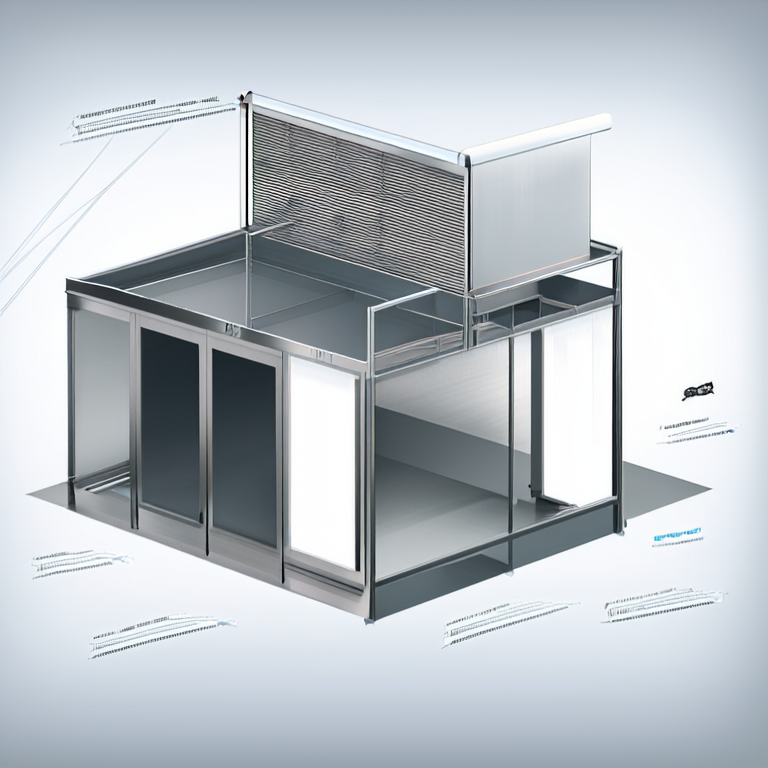
Cleanroom design refers to the meticulous planning and construction of controlled environments that minimize contamination through strict air quality controls, material handling protocols, and personnel behavior guidelines. The term itself encompasses several industry-related concepts, such as "air cleanliness," "contamination control," and "controlled environments." According to the Institute of Environmental Sciences and Technology (IEST), the cleanroom classification system, established in ISO 14644-1, measures the allowable particle counts in air, starting from Class 1 (most stringent) to Class 9 (least stringent). This classification helps organizations determine the appropriate cleanroom design based on the operational requirements of their specific industry.
Cleanroom design is employed in various critical fields, including:
Pharmaceutical Manufacturing: Cleanrooms are essential for the production of sterile products, where even small amounts of contaminants can lead to product failures or health risks. For example, the FDA mandates that sterile drug manufacturing must utilize cleanroom environments graded at Class 100 (equivalent to Class 5 in ISO standards).
Semiconductor Industry: The production of microchips requires a dust-free environment. Semiconductor cleanrooms are usually classified at a minimum of Class 10,000 (ISO Class 7), as even tiny particles can disrupt electronic component functionality.
Biotechnology: In labs dealing with cell cultures or genetic modification, contamination can alter experimental results or produce unsafe products. Cleanrooms help ensure consistency and reliability in research outcomes.
Aerospace: The manufacture of satellite and spacecraft components mandates a clean environment to prevent defects that can compromise flight safety and success.
Cleanroom design yields several distinct advantages:
Enhanced Product Quality: Implementing strict contamination control can improve product reliability, as evidenced by a 23% increase in product yield rates in companies that use cleanroom environments properly.
Regulatory Compliance: Meeting industry-specific regulations is crucial for avoiding costly fines or business disruptions. Implementing proper cleanroom design aligns with guidelines from various governing bodies such as the FDA, ISO, and Eudralex.
Cost Efficiency: By reducing defects and recalls, companies can save significantly—research indicates that defect-related costs can be as high as 15% of total production costs in contaminated environments. A well-designed cleanroom can mitigate these financial risks.
Increased Productivity: According to recent studies from the International Cleanroom Institute, a strategic cleanroom design can lead to a 30% increase in productivity due to streamlined processes and fewer disruptions from contamination issues.
Companies looking to invest in cleanroom design can start by assessing their specific needs relative to the approved cleanroom classification. Resources like the user guide from Pharma United can provide further insights into the best practices and technical specifications tailored to your industry requirements. Involve engineers and professionals experienced in ISO compliant cleanroom design to tailor the solution to your facility.
Q: What is the difference between a Class 100 cleanroom and a Class 10,000 cleanroom?
A: The Class 100 cleanroom allows a maximum of 100 particles (0.5 µm or larger) per cubic foot of air, while a Class 10,000 cleanroom allows up to 10,000 particles in the same volume. Class 100 environments are stricter and are generally required for sterile drug production.
Q: How often should cleanrooms be monitored?
A: Cleanroom environments should be continuously monitored for temperature, humidity, and particle counts to ensure compliance with established standards. Regular audits should happen at least quarterly.
Q: Can I design a cleanroom myself?
A: While small cleanroom designs may be manageable, it is advisable to work with a professional experienced in cleanroom layout and ISO regulations.
Each step in cleanroom design is vital to ensuring that contamination risks are mitigated and product quality is upheld. For businesses aiming to elevate their operational standards, understanding cleanroom design is not just beneficial—it is essential. To deepen your understanding of implementation strategies or explore robust solutions, consider resources from Pharma United.
Leave Your Message

Pharma United Co., Ltd.
Pharma United Co., Ltd.
Tel.: +86 177 1554 8238
Add.: NO.58 Beiyuan Road, Dianshanhu, Kunshan, Jiangsu, China, ZIP code 215345
Navigation
Navigation