May. 28, 2026
Laminar air flow is defined as airflow in which the entire body of air within a designated space is uniform in both velocity and direction. In laboratory and cleanroom environments, this unidirectional airflow minimizes airborne particles, reduces turbulence, and helps maintain a highly controlled working area.
Laminar airflow is widely used in pharmaceutical manufacturing, microbiology laboratories, electronics assembly, semiconductor production, and other industries where contamination control is critical. By continuously supplying HEPA-filtered air in a smooth, consistent pattern, laminar flow systems help protect sensitive materials, experiments, and processes from airborne contamination.
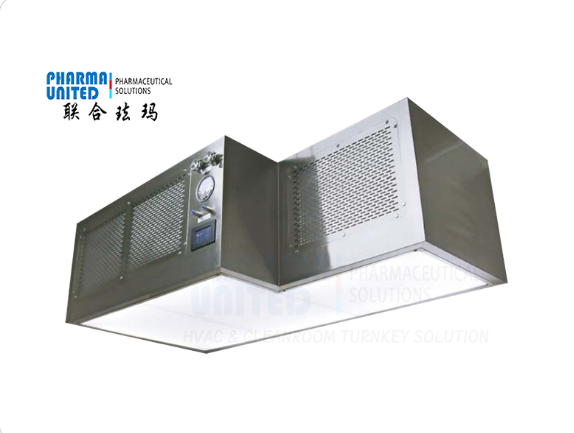
Clean benches and biological safety cabinets are common examples of laminar air flow hoods (a.k.a. cell culture hood or tissue culture hood).
These laboratory enclosures are designed to carefully direct HEPA-filtered air across the work area in a controlled, unidirectional pattern. Depending on the equipment design, laminar flow hoods may protect the product, the operator, the environment, or a combination of all three.
Laminar flow hoods are commonly used for:
The concept of laminar airflow was first introduced in laboratory contamination control systems in the early 1960s. Today, it remains one of the most important airflow principles used in modern cleanroom engineering and laboratory equipment design.
Although different types of laminar flow hoods serve different applications, they all share one fundamental characteristic: the use of HEPA-filtered unidirectional airflow to maintain sterility, reduce airborne contamination, and minimize turbulence inside the workspace.
Class II Biosafety Cabinets, sometimes referred to as cell or tissue culture hoods, maintain product protection through HEPA-filtered laminar downflow over the work zone. Per the NSF definition, these ventilated cabinets also feature inward airflow at the open front to protect operators and HEPA filtered exhaust air for environmental protection.
Class II, Type A cabinets recirculate air back into the laboratory unless a canopy connection is warranted. Class II, Type A2 cabinets are a common type of tissue culture hood.
Class II, Type B cabinets are hard-ducted to the outside for use with chemicals that produce hazardous vapors.
Class II, Type C1 cabinets can function in either Type A or Type B mode. Whichever model suits your application, safe operation within biological safety cabinets is imperative to protect the integrity of your work and your personal safety.
Laminar flow clean benches are suitable for applications that require product protection, such as media plate preparation or tissue culture maintenance. Clean benches are sometimes referred to as laminar flow hoods or laminar airflow workstations. Air is drawn in through a prefilter located at the top of the clean bench before being pulled through a HEPA filter. This is a type of tissue culture hood that can be used with non-hazardous biological samples.
In a horizontal clean bench, laminar air is projected horizontally towards the operator. In a vertical clean bench, laminar air is then projected vertically over the work area. In both instances, laminar flow provides a particulate-free work area
PCR stations, enclosures that are specifically designed to house polymerase chain reaction experiment, utilize vertical flow of HEPA-filtered air to maintain a particulate-free work environment. A UV light is included that can help denature genetic material (DNA, RNA, etc.), providing secondary decontamination.
Zoned airflow refers to airflow patterns within certain biosafety cabinets that are not fully uniform or truly laminar.
Instead of one consistent airflow column, the cabinet contains multiple airflow zones with different velocities. These zones are engineered to improve containment and protection performance in situations where traditional laminar flow alone is insufficient.
However, the boundaries between airflow zones can create localized turbulence because adjacent air columns move at different speeds.
Zoned airflow is commonly used as an advanced engineering solution in specialized biosafety cabinet designs.
Laminar airflow and dilution airflow are fundamentally different airflow concepts.
Laminar air flow:
Dilution flow:
Dilution airflow is commonly found in filtered glove boxes and some containment enclosures.
Unlike laminar systems, dilution flow does not create a continuously clean airflow curtain across the work surface.
Turbulent flow occurs when airflow becomes irregular and creates random swirls or eddies within an enclosure.
Turbulence can:
Common causes of turbulence include:
In cleanroom engineering, reducing turbulence is critical for maintaining ISO cleanliness standards and ensuring stable environmental control.
Laminar airflow technology plays a critical role in modern laboratories, cleanrooms, and controlled environments. By providing uniform HEPA-filtered airflow, laminar flow hoods help maintain sterility, minimize contamination, and improve operational reliability.
From biosafety cabinets and clean benches to PCR workstations and advanced cleanroom equipment, laminar airflow remains one of the most effective engineering methods for contamination control.
As laboratory standards continue to evolve, high-performance laminar flow systems will remain essential for pharmaceutical manufacturing, biotechnology research, healthcare applications, and cleanroom engineering worldwide.
Leave Your Message

Pharma United Co., Ltd.
Pharma United Co., Ltd.
Tel.: +86 177 1554 8238
Add.: NO.58 Beiyuan Road, Dianshanhu, Kunshan, Jiangsu, China, ZIP code 215345
Navigation
Navigation