Oct. 22, 2026
Have you ever wondered why pharmaceutical production facilities, semiconductor factories, and biological laboratories all require dedicated cleanrooms?
Behind seemingly ordinary walls, doors, windows, and air-handling systems lies a comprehensive approach to environmental control. A cleanroom must not only control airborne particles but also manage temperature, humidity, pressure, microorganisms, and specific chemical contaminants, as required by the production process.
So how exactly is a cleanroom built? Let us start with the principles behind its operation.
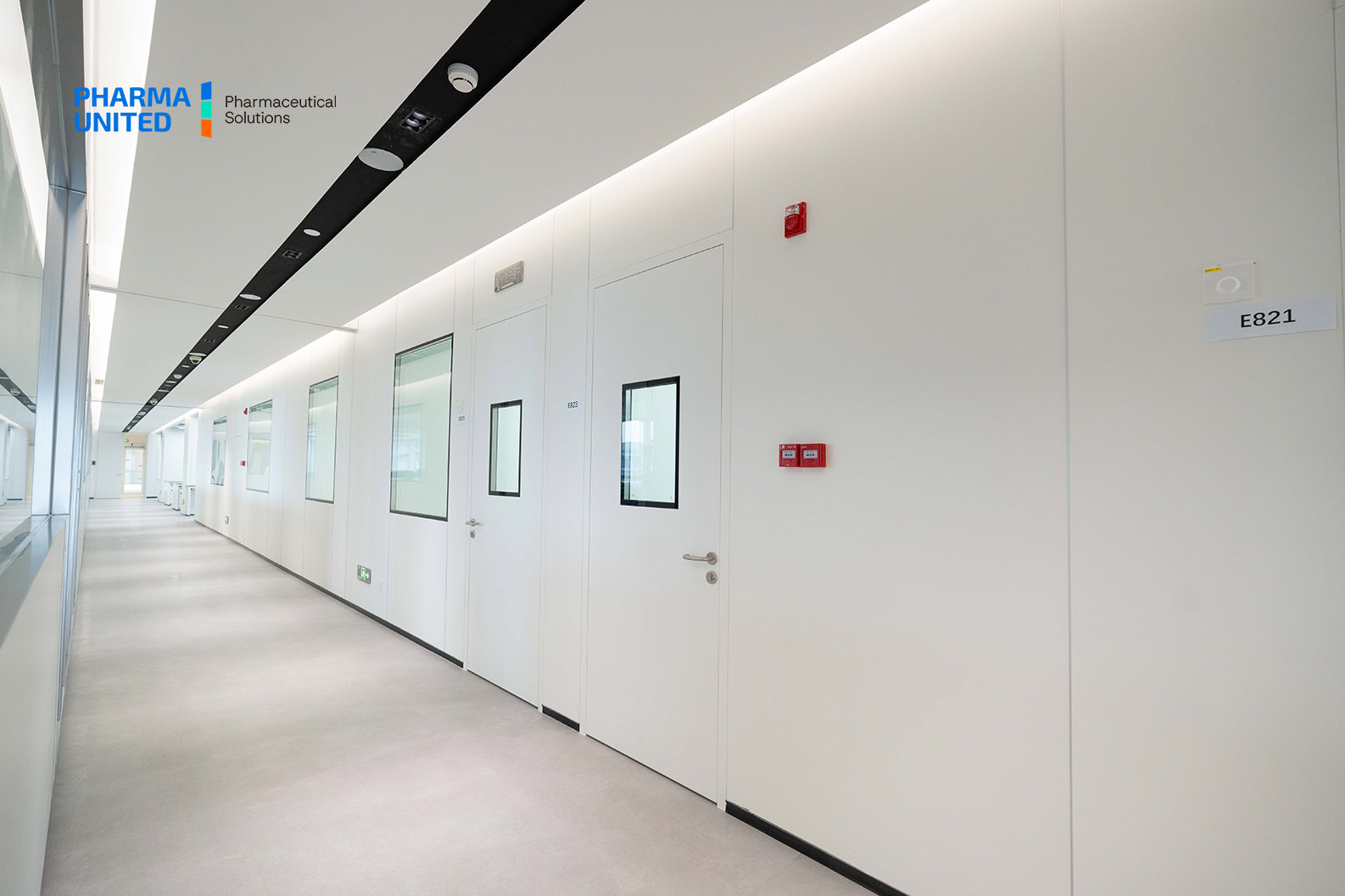
01 Why Must a Cleanroom Be Kept Clean?
In ordinary environments, the air contains particles too small to be seen with the naked eye. These particles may originate from personnel activities, equipment operation, material handling, or outdoor air.
In certain precision manufacturing and pharmaceutical processes, such contaminants can affect product quality and may even pose a risk of cross-contamination.
For example, during semiconductor manufacturing, particles can affect microscopic structures on wafers. In pharmaceutical production, particles, microorganisms, and other contamination risks must be controlled according to the specific process.
A cleanroom is therefore not simply a space that has been thoroughly cleaned. It is an environment maintained within specified limits through appropriate spatial design, air treatment, personnel management, and equipment configuration.
02 How Does a Cleanroom Control Airborne Contaminants?
Air Filtration
Air is treated by suitable filtration equipment before entering the cleanroom to reduce the concentration of airborne particles. Different filtration systems, such as high-efficiency particulate air (HEPA) filters, may be selected according to the required cleanliness classification and process needs.
Airflow Design
The way treated air enters, moves through, and leaves a room affects how contaminants spread and are removed. Proper supply-air and return-air design helps maintain the required clean environment.
Pressure Differential Control
Pressure differentials can be established between areas according to contamination-control requirements, directing airflow and reducing the risk of contaminants spreading from one area to another.
Personnel and Material Flow Management
Personnel gowning, material cleaning, air showers, pass boxes, and door interlocking measures, where necessary, can all be configured to meet actual needs and reduce contamination risks associated with personnel and material movement.
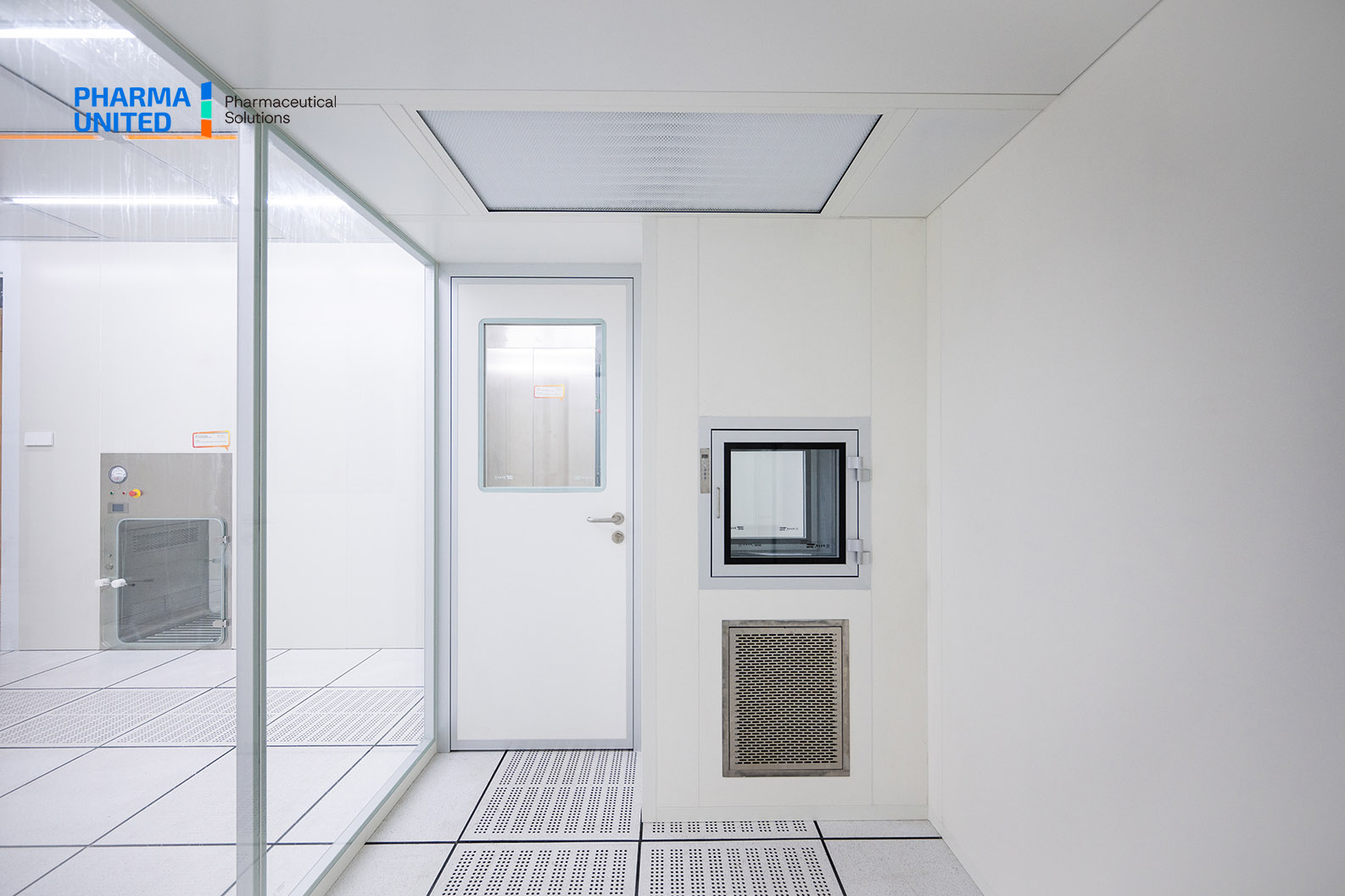
03 What Matters When Choosing Cleanroom Wall Panels?
Core Materials and Construction
Common sandwich panels may use different core materials, such as rock wool and magnesium oxide-based materials. Different constructions vary in fire performance, weight, strength, and other properties. Selection should be based on product test documentation and project requirements.
Surface Materials
Panel surfaces should be evaluated for flatness, durability, cleaning methods, and compatibility with cleaning agents or disinfectants that may be used in the production environment.
Joints and Installation
Panel connections, internal and external corner details, sealing methods, and interfaces with doors and windows all affect the overall quality of the enclosure and its long-term maintenance.
Project Suitability
Pharmaceutical, biopharmaceutical, and electronics manufacturing applications have different process requirements. Suitability cannot be determined by panel type alone; project specifications, operating conditions, and relevant performance requirements must also be considered.
04 Why Do Cleanroom Doors and Windows Require Careful Selection?
Steel Cleanroom Doors
Door leaves, frames, and surface finishes can be designed to suit project requirements. Selection should consider sealing performance, durability, ease of cleaning and maintenance, and frequency of use.
Aluminum-Framed Doors
These doors can be configured with various door structures and spatial design requirements. Particular attention should be paid to frame connections, sealing methods, and overall installation quality.
Single- and Double-Glazed Viewing Windows
Viewing windows make it easier to observe operations in different areas. The choice between single- and double-glazed designs should take into account wall construction, visibility needs, and project technical specifications.
Automatic Doors and Other Specialized Door Types
Where efficient access, equipment integration, or special process conditions are required, automatic doors, airtight doors, and other solutions can be evaluated based on site conditions.
05 What Roles Do Supporting Cleanroom Equipment Play?
Air Showers
Air showers use high-velocity clean air to remove some particles adhering to personnel or item surfaces. They are commonly installed at entrances to clean areas where such measures are needed. Their configuration should be determined based on personnel flow and project design.
Standard Pass Boxes
Pass boxes facilitate material transfer between areas, helping reduce unnecessary personnel movement and cross-traffic. Features such as door interlocking can be incorporated based on operational requirements.
VHP Pass Boxes
In addition to their basic material-transfer function, VHP pass boxes use a vaporized hydrogen peroxide (VHP) sterilization process to treat compatible materials. Their use requires consideration of material compatibility, process validation, residual control, and applicable safety requirements.
06 From Individual Products to Integrated Cleanroom Solutions
Building a cleanroom involves much more than simply assembling panels, doors, windows, and equipment. It requires coordinated consideration of the space layout, production processes, air treatment, enclosure systems, and installation interfaces.
With a focus on cleanroom panels, cleanroom doors and windows, and related supporting equipment, Pharma United is committed to providing products and complementary support for controlled-environment projects in the pharmaceutical, biopharmaceutical, medical device, and electronics manufacturing industries.
Pharma United Co., Ltd. is a national high-tech enterprise integrating research and development, manufacturing, sales, and services. With 20 years of experience in the cleanroom industry, the company offers an integrated product portfolio covering cleanroom panels, cleanroom equipment, cleanroom doors and windows, and associated system components. We are committed to providing high-quality cleanroom equipment, project-support products, and comprehensive solutions for key industries including pharmaceuticals and bioengineering, laboratories, medical devices, electronics and semiconductors, fine chemicals, food processing, and cosmetics.
Tel/WhatsApp: +86 177 1554 8238
Email: chin@pharma-united.com
Leave Your Message

Pharma United Co., Ltd.
Pharma United Co., Ltd.
Tel.: +86 177 1554 8238
Add.: NO.58 Beiyuan Road, Dianshanhu, Kunshan, Jiangsu, China, ZIP code 215345
Navigation
Navigation