Home - News - How Do Cleanroom Air Showers Work?

How Do Cleanroom Air Showers Work?

May. 27, 2026

Air showers are used to clean particles off personnel before they enter a cleanroom. They are typically used for higher classification cleanrooms (ISO-5 /class 100 cleanrooms, ISO-6 / class 1000 cleanrooms) and are very popular in the semiconductor industry.
What Is a Cleanroom Air Shower?

How Do Cleanroom Air Showers Work?

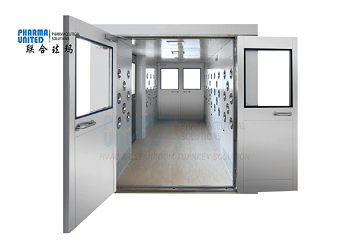
A cleanroom air shower is a controlled, enclosed chamber installed at the entrance of a cleanroom. Its primary function is to remove dust, particles, and contaminants from personnel or materials before they enter a high-grade controlled environment.

Unlike ordinary air blowing systems, a cleanroom air shower uses high-velocity, HEPA-filtered air jets to dislodge particles from clothing, equipment surfaces, and packaging.

This step is critical because even microscopic contamination can compromise product yield in industries such as semiconductors, pharmaceuticals, biotechnology, and precision manufacturing.

How Do Cleanroom Air Showers Work?

The working principle of a cleanroom air shower is based on high-speed air impact + filtration + recirculation.

Here is the step-by-step process:

1. Entry and Interlocking Door System

When a person enters the air shower chamber, the system automatically detects entry through sensors.

  • The door locks to prevent contamination exchange
  • This ensures only one side is open at a time
  • Prevents unfiltered air from entering the cleanroom

2. High-Velocity Air Jet Activation

Once inside, the system activates multiple air nozzles located on the walls, ceiling, and sometimes floor.

  • Air velocity typically ranges from 18–30 m/s
  • Jets are precisely angled to maximize particle removal
  • Air blasts loosen dust and contaminants from clothing and surfaces

3. HEPA/ULPA Filtration System

The contaminated air is not exhausted directly. Instead, it is:

  • Drawn back into the base return air system
  • Passed through HEPA (High Efficiency Particulate Air) filters
  • Optionally upgraded to ULPA filters for ultra-clean environments

HEPA filters typically remove 99.97% of particles ≥0.3 microns.

4. Air Recirculation Loop

After filtration, the clean air is:

  • Re-pressurized by a fan system
  • Re-directed back through the nozzles
  • The cycle repeats during the shower process

This closed-loop system ensures energy efficiency and consistent cleaning performance.

5. Exit to Cleanroom

After the preset cycle time (usually 10–30 seconds):

  • The exit door unlocks
  • Personnel move into the cleanroom with significantly reduced particle load

Key Components of a Cleanroom Air Shower

A typical air shower system includes the following core components:

1. HEPA Filtration Unit

The heart of the system that ensures clean airflow quality.

2. High-Pressure Blower/Fan

Generates the airflow required for particle removal.

3. Nozzle System

Stainless steel or aluminum nozzles strategically placed for 360° air coverage.

4. Interlocking Doors

Ensures contamination control and prevents cross-airflow.

5. Control Panel

Allows adjustment of:

  • Shower time
  • Air velocity
  • Door delay timing
  • Emergency stop

6. Sensors

Infrared or automatic sensors detect entry and trigger operation.


Why Cleanroom Air Showers Are Important

Even with protective garments, humans are one of the biggest contamination sources in cleanroom environments.

Cleanroom air showers help to:

  • Reduce particle contamination from garments
  • Improve cleanroom classification stability
  • Protect sensitive production processes
  • Increase product yield and quality consistency

In industries like semiconductor wafer fabrication, even a single particle can cause defects, making air showers essential.


Applications of Cleanroom Air Showers

Cleanroom air showers are widely used in:

Semiconductor Industry

  • Wafer fabrication
  • Chip assembly areas

Pharmaceutical Manufacturing

  • Sterile drug production
  • Vaccine filling lines

Biotechnology Labs

  • Cell culture rooms
  • Genetic research facilities

Electronics Manufacturing

  • PCB assembly
  • Precision optical components

Food & Beverage (High Hygiene Areas)

  • Packaging zones
  • Clean processing environments

Types of Cleanroom Air Showers

1. Single-Person Air Shower

Designed for individual entry points.

2. Double-Person Air Shower

Used in medium-to-high traffic cleanrooms.

3. Cargo Air Shower

For material transfer carts, pallets, or equipment.

4. High-Speed Air Shower

Optimized for fast-cycle operations in high-throughput facilities.


Cleanroom Air Shower Performance Parameters

When evaluating a system, key technical specifications include:

  • Air velocity: 18–30 m/s
  • Filtration efficiency: ≥99.97% @ 0.3 micron (HEPA)
  • Shower cycle time: 10–30 seconds (adjustable)
  • Noise level: typically ≤75 dB
  • Material: stainless steel or powder-coated steel
  • Power supply: 220V / 380V options

Benefits of Using Cleanroom Air Showers

1. Improved Contamination Control

Significantly reduces particle entry into cleanrooms.

2. Higher Product Yield

Minimizes defect rates in sensitive manufacturing.

3. Compliance with Cleanroom Standards

Supports ISO cleanroom classifications.

4. Cost Efficiency

Reduces product waste caused by contamination.

5. Automation and Efficiency

Speeds up personnel entry while maintaining cleanliness standards.


Maintenance of Cleanroom Air Showers

Proper maintenance ensures long-term performance:

  • Replace HEPA filters regularly (typically 6–18 months)
  • Clean nozzles to prevent blockage
  • Inspect door interlocking systems
  • Test airflow velocity periodically
  • Check sensor accuracy and control systems

Preventive maintenance is essential to avoid contamination risks.


Common Problems and Troubleshooting

Weak Airflow

Possible causes:

  • Clogged HEPA filter
  • Fan malfunction
  • Air leakage in duct system

Door Not Locking

Possible causes:

  • Sensor misalignment
  • Electrical control failure

Uneven Air Jet

Possible causes:

  • Nozzle blockage
  • Air pressure imbalance

FAQ: Cleanroom Air Showers

1. Are air showers required in all cleanrooms?

No. They are mainly required for ISO-5 and ISO-6 environments or higher contamination risk areas.

2. How long should a cleanroom air shower cycle be?

Typically between 10–30 seconds depending on cleanliness requirements.

3. Do air showers replace gowning procedures?

No. They are used in addition to proper gowning, not as a replacement.

4. Can air showers remove all contamination?

No system can remove 100% of particles, but they significantly reduce contamination levels.


Conclusion

Cleanroom air showers are a critical contamination control solution for high-grade clean environments. By using high-velocity HEPA-filtered air, they effectively remove particles from personnel and materials before entry into cleanrooms.

In industries where microscopic contamination can lead to major losses, cleanroom air showers play an essential role in maintaining product quality, compliance, and operational efficiency.

Leave Your Message

  • Afghanistan
  • Albania
  • Algeria
  • American Samoa
  • Andorra
  • Angola
  • Anguilla
  • Antarctica
  • Antigua and Barbuda
  • Argentina
  • Armenia
  • Aruba
  • Australia
  • Austria
  • Azerbaijan
  • Bahamas
  • Bahrain
  • Bangladesh
  • Barbados
  • Belarus
  • Belgium
  • Belize
  • Benin
  • Bermuda
  • BBhutan
  • Bolivia
  • Bosnia and Herzegovina
  • Botswana
  • Bouvet Island
  • Brazil
  • British Indian Ocean Territory
  • Brunei Darussalam
  • Bulgaria
  • Burkina Faso
  • Burundi
  • Cambodia
  • Cameroon
  • Canada
  • Cape Verde
  • Cayman Islands
  • Central African Republic
  • Chad
  • Chile
  • China
  • Christmas Island
  • Cocos (Keeling) Islands
  • Colombia
  • Comoros
  • Congo
  • Cook Islands
  • Costa Rica
  • Cote D'Ivoire
  • Croatia
  • Cuba
  • Cyprus
  • Czech Republic
  • Denmark
  • Djibouti
  • Dominica
  • East Timor
  • Ecuador
  • Egypt
  • El Salvador
  • Equatorial Guinea
  • Eritrea
  • Estonia
  • Ethiopia
  • Falkland Islands (Malvinas)
  • Faroe Islands
  • Fiji
  • Finland
  • France, Metropolitan
  • French Guiana
  • French Polynesia
  • Gabon
  • Gambia
  • Georgia
  • Germany
  • Ghana
  • Gibraltar
  • Greece
  • Greenland
  • Grenada
  • Guadeloupe
  • Guam
  • Guatemala
  • Guinea
  • Guinea-Bissau
  • Guyana
  • Haiti
  • Honduras
  • Hong Kong, China
  • Hungary
  • Iceland
  • India
  • Indonesia
  • Iran (Islamic Republic of)
  • Iraq
  • Ireland
  • Israel
  • Italy
  • Jamaica
  • Japan
  • Jordan
  • Kazakhstan
  • Kenya
  • Kiribati
  • North Korea
  • South Korea
  • Kuwait
  • Kyrgyzstan
  • Lao People's Democratic Republic
  • Latvia
  • Lebanon
  • Lesotho
  • Liberia
  • Libyan Arab Jamahiriya
  • Liechtenstein
  • Lithuania
  • Luxembourg
  • Macau
  • Madagascar
  • Malawi
  • Malaysia
  • Maldives
  • Mali
  • Malta
  • Marshall Islands
  • Martinique
  • Mauritania
  • Mauritius
  • Mayotte
  • Mexico
  • Micronesia
  • Moldova
  • Monaco
  • Mongolia
  • Montserrat
  • Morocco
  • Mozambique
  • Myanmar
  • Namibia
  • Nauru
  • Nepal
  • Netherlands
  • New Caledonia
  • New Zealand
  • Nicaragua
  • Niger
  • Nigeria
  • Niue
  • Norfolk Island
  • Northern Mariana Islands
  • Norway
  • Oman
  • Pakistan
  • Palau
  • Panama
  • Papua New Guinea
  • Paraguay
  • Peru
  • Philippines
  • Pitcairn
  • Poland
  • Portugal
  • Puerto Rico
  • Qatar
  • Reunion
  • Romania
  • Russian Federation
  • Rwanda
  • Saint Kitts and Nevis
  • Saint Lucia
  • Saint Vincent and the Grenadines
  • Samoa
  • San Marino
  • Saudi Arabia
  • Senegal
  • Seychelles
  • Sierra Leone
  • Singapore
  • Slovak Republic
  • Slovenia
  • Solomon Islands
  • Somalia
  • South Africa
  • Spain
  • Sri Lanka
  • St. Helena
  • Sudan
  • Suriname
  • Swaziland
  • Sweden
  • Switzerland
  • Syrian Arab Republic
  • Taiwan, China
  • Tajikistan
  • Tanzania
  • Thailand
  • Togo
  • Tokelau
  • Tonga
  • Trinidad and Tobago
  • Tunisia
  • Turkey
  • Turkmenistan
  • Turks and Caicos Islands
  • Tuvalu
  • Uganda
  • Ukraine
  • United Arab Emirates
  • United Kingdom
  • United States
  • Uruguay
  • Uzbekistan
  • Vanuatu
  • Vatican City State (Holy See)
  • Venezuela
  • Viet Nam
  • Virgin Islands (U.S.)
  • Wallis and Futuna Islands
  • Western Sahara
  • Yemen
  • Zambia
  • Zimbabwe
  • Montenegro
  • Serbia
  • Palestine
  • South Sudan
  • Jersey

Pharma United Co., Ltd.

Pharma United Co., Ltd.

Tel.: +86 177 1554 8238

WhatsApp: +86 138 1752 2939

E-mail: sales@pharma-united.com

Add.: NO.58 Beiyuan Road, Dianshanhu, Kunshan, Jiangsu, China, ZIP code 215345

Copyright @ Pharma United Co., Ltd. All Rights Reserved | Sitemap